

In every luxury watch brand’s catalogue is an entry-level model—one that offers a taste of its heritage, craftsmanship and technical expertise at a far lower price than its top-tier watches. With this in mind, we’ve rounded up the most affordable mechanical watches from 12 of watchmaking’s most illustrious brands.
Read on if you want to find out what you get for your money, where each model sits within the brand’s wider catalogue and how these watches—despite being less expensive—still embody the qualities that made their maker famous…
Grand Seiko Heritage 37mm, reference SBGW301
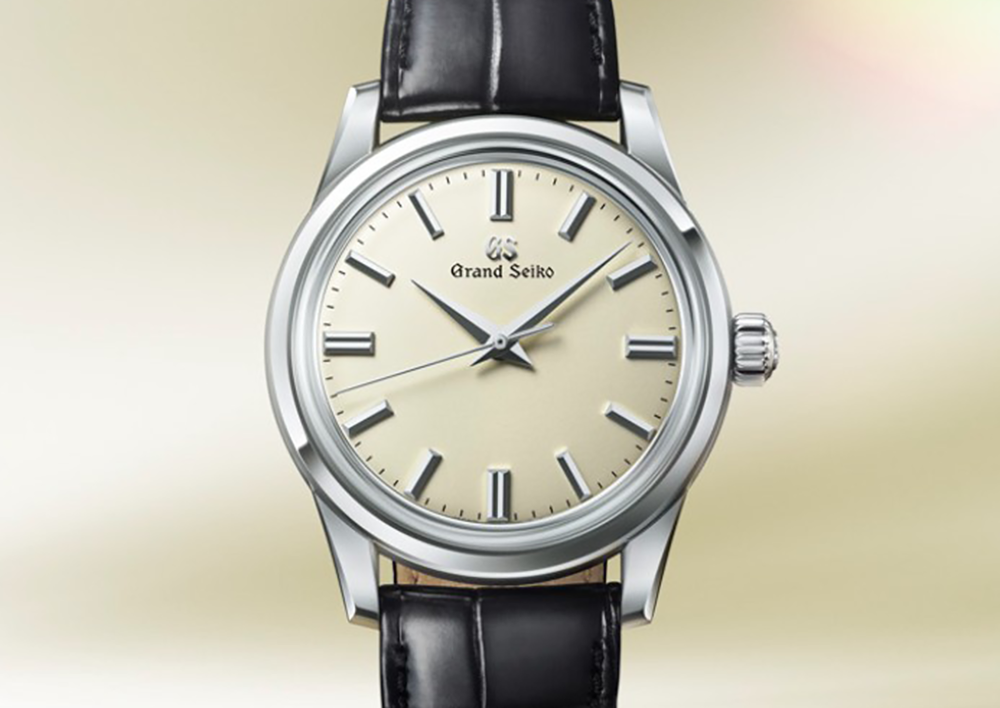
Grand Seiko is a brand that’s synonymous with ultra precise, impeccably finished mechanical watches, boasting a pedigree that’s on par with even the most renowned Swiss maisons.
But it also knows a thing or two about quartz watches, with its most sought-after Spring Drive models powered by hybrid movements that combine both cutting-edge quartz technology with mechanical.
And its most affordable entry-level pieces contain highly accurate and well-crafted quartz movements costing a few thousand pounds.
But it’s this Grand Seiko Elegance Collection SBGW301—which replaced the beloved SBGW231 in January 2024— that is the most affordable of its solely mechanical watches, costing £4,400 brand new.
Sometimes called the “Japanese Calatrava”, it’s a stainless-steel dress watch that resembles classic versions of Patek Philippe’s flagship model thanks to its quality of finishing, understated aesthetic, slim profile and manual-wind movement, which can be viewed through the caseback.
This being a Grand Seiko, the 37mm case has been polished using its famed “zaratsu” technique for a mirror-like finish. And this is echoed in its faceted hour markers and hands, maximising legibility. These have been applied to an off-white dial that the brand says is inspired by Japan’s rice-harvesting season. I’m not familiar with such a time so I’ll take their word for it, otherwise I would say it was…beigey.
This time only watch is powered by the manual-wind Calibre 9S64 which is made entirely by Grand Seiko, with every component—even the lubricating oils— made in-house. Quite simply, it's hard to find fault with anything about it, and it's one of the best value watches in its price range.
Omega De Ville Prestige 40mm, reference 434.13.40.20.03.001

Omega doesn’t really have an entry-level collection, but its most affordable mechanical watch can be found in the De Ville Prestige family.
You can buy this stainless-steel time-and-date model for £4,300–exactly one thousand pounds less than the most affordable Seamaster.
But this certainly isn’t anything less than the premium feel you expect from an Omega watch, and that’s partly thanks to its unusual sun-brushed midnight-blue dial that alternates slender, applied Roman numerals with cabochon hour markers.
There’s also a date window at 6 o’clock, a railroad minute track at the edge of the dial, and extra-thin leaf-style hands; in fact, everything about this watch is slim, including the case, which is 9.93mm.
Despite the price difference between this and an entry-level Seamaster, this watch uses the same movement—namely the Calibre 8800, a METAS-certified chronometer featuring the famous co-axial escapement.
The De Ville series doesn’t have the cultural cachet of the Seamaster, or Speedmaster, but this is an Omega line that stretches back to the 1960s and is now a fully embedded member of the Omega family, sharing dress-watch duties with the Constellation.
Rolex Oyster Perpetual 36mm, reference 126000
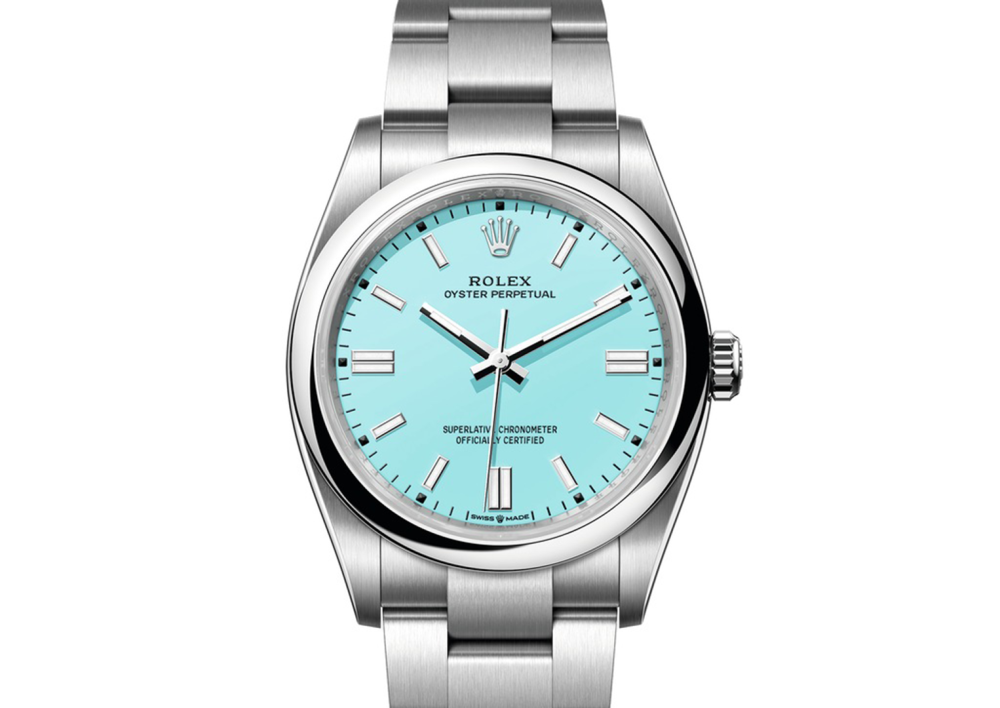
The Rolex Oyster Perpetual might just be the best everyday Rolex watch. Classic and clean, it’s hard to find fault with its timeless design. And it happens to be Rolex’s entry-level timepiece, too.
£5,600 pounds gets you the 36mm Oystersteel version of the watch on which Rolex built its reputation—the sturdy shoulders on which all other Rolex models stand.
It was famously the first watch to combine a screw-down waterproof case with a self-winding movement, and the Oyster celebrates its 100th anniversary this year—as if proof was needed that this is a perennial favourite.
It’s the very epitome of the versatile stainless-steel daily watch, coming in a variety of dial colours and on the classic three-link Oyster Bracelet.
The current Oyster Perpetual in a 36mm case runs on a Superlative Chronometer Calibre 3230 movement, meaning it’s been awarded both official chronometer certification and Rolex’s own certification after casing. The 70-hour power reserve is on a par with most modern Rolex movements, which are in-house and world-renowned for their robust build quality.
Tudor 1926 36mm, reference m91450-0010
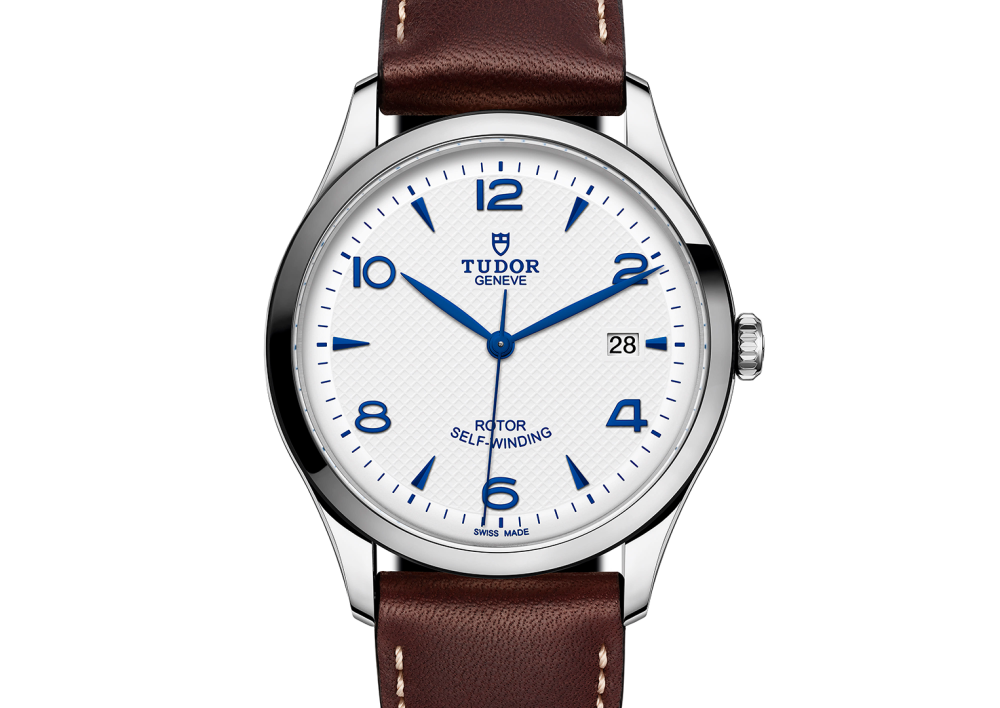
Believe it or not, you can still buy a watch from Rolex’s sister brand, Tudor, for under £2,000, but as we’re about to see, it’s not what you’d expect.
This stainless-steel 36mm model from the 1926 collection costs £1,870 and features an embossed opaline dial with blue hour markers and hands, and a date window at 3 o’clock.
Inside you’ll find the Calibre T601, which offers 38 hours of power reserve and 100 metres of water resistance.
This version comes on a strap, but it’s just a hundred pounds more on a bracelet.
If you want to get into Tudor’s sport watches but the Black Bay series is out of reach, there’s always the Ranger, the brand’s very capable answer to the Rolex Explorer.
£2,750 gets you a 36mm time-only stainless-steel version on a fabric strap with handsome military looks and Tudor’s own COSC-certified MT5400 automatic movement.
As with the Explorer, it’s water resistant to 100 metres and you can choose from two dial options: black or white—well, it’s technically ‘Dune White’ according to Tudor and it’s actually more of a light sandy beige, but you know what I mean.
Longines Flagship Classic 38.5mm, reference L48744216
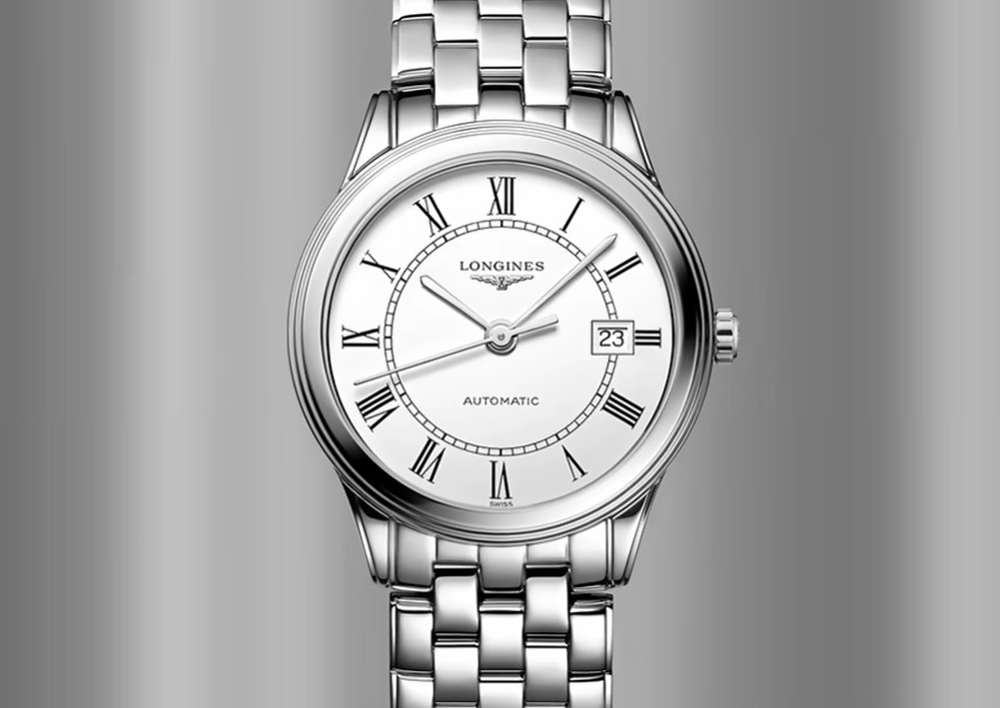
When my watch-newbie friends ask me for nuggets of luxury watch-buying wisdom, I’ll often point them in the direction of Longines. It has the rare combination of being both an accessible brand and one with a history stretching back to when Queen Victoria was a nipper.
This is the Longines Flagship Classic, suitably named and with a subtly stepped, stainless-steel 38.5mm round case, and a concentric matte-white dial with a date window and printed Roman numerals—although there are dial variations, including a very nice one in blue.
It’s water-resistant to 30 metres and comes with an ETA-based Calibre L888.5 automatic movement with 72-hour power reserve.
Although this comes on an elegant 5-link stainless-steel bracelet, it would look especially classy on a black leather strap, maybe even, dare I say “Cartier-esque”, or “Cartiesque” if you will.
At £1,550, it’s good value for money for such a timeless piece.
Breitling SuperOcean 42mm, reference A173751C1B1S1
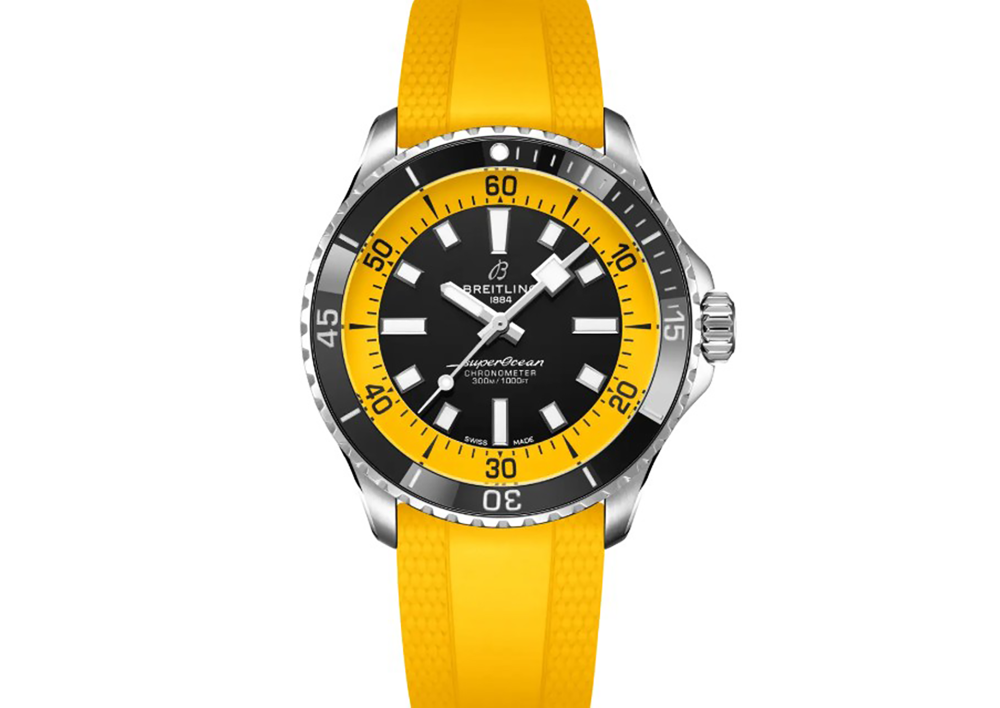
For an entry-level mechanical Breitling, head for the SuperOcean dive-watch collection. We’ve picked out this 42mm version on a rubber strap, which is priced at £4,550, but all case sizes, from 36mm to 46mm, are priced exactly the same.
The SuperOcean is clearly where Breitling comes to cut loose and throw some colour around. Comparing this collection to more conservative series like the Navitimer and the Chronomat is like comparing a morgue to a mardi gras.
Dial colours range from turquoise to bold orange, and there are even versions with rainbow-gradient hour markers—which is handy if you like the packet-of-Skittles, multicoloured look but can’t stretch to a Rainbow Daytona.
Pretty colours aside, these watches have solid dive-watch specs with ceramic bezel inlays, copious amounts of lume for superb legibility, and 300 metres of water resistance.
The entire SuperOcean range, no matter the size, is powered by the same automatic Calibre 17 movement—basically a modified Sellita or ETA that’s been COSC-graded. And the power reserve is 38 hours.
IWC Pilot's Watch Le Petit Prince 36mm, reference IW458802
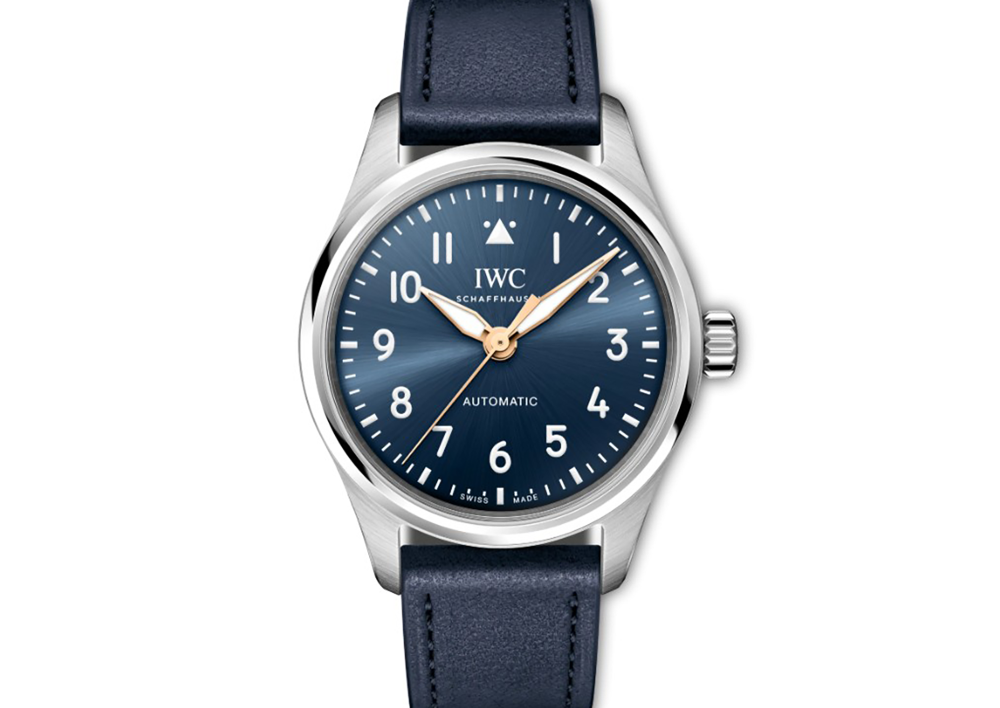
IWC’s time-only version of the Le Petit Prince in stainless steel is instantly recognisable as one of the brand’s celebrated pilot’s watches thanks to its simple Arabic numerals, lume-filled sword-shaped hands and the customary triangle at 12 o’clock.
With its 36mm case, it’s noticeably smaller than your typical IWC, many of which are chronographs over 46mm and look as though they should be strapped over the leather glove of a World War II fighter pilot.
But don’t let the size and simplicity fool you—beneath the hood is a movement that’s a reminder of why IWC is revered by enthusiasts for its engineering expertise. The Calibre 32102 comes with one of the brand’s longest power reserves, in this case a whopping 5 days.
Other points of interest include the dark blue-sunbrushed dial and a caseback laser-engraved with an image of Le Petit Prince himself, the title of a book written by French aviator and author Antoine de Saint-Exupery.
Cartier Tank Must Automatic 41mm, reference WSTA0141
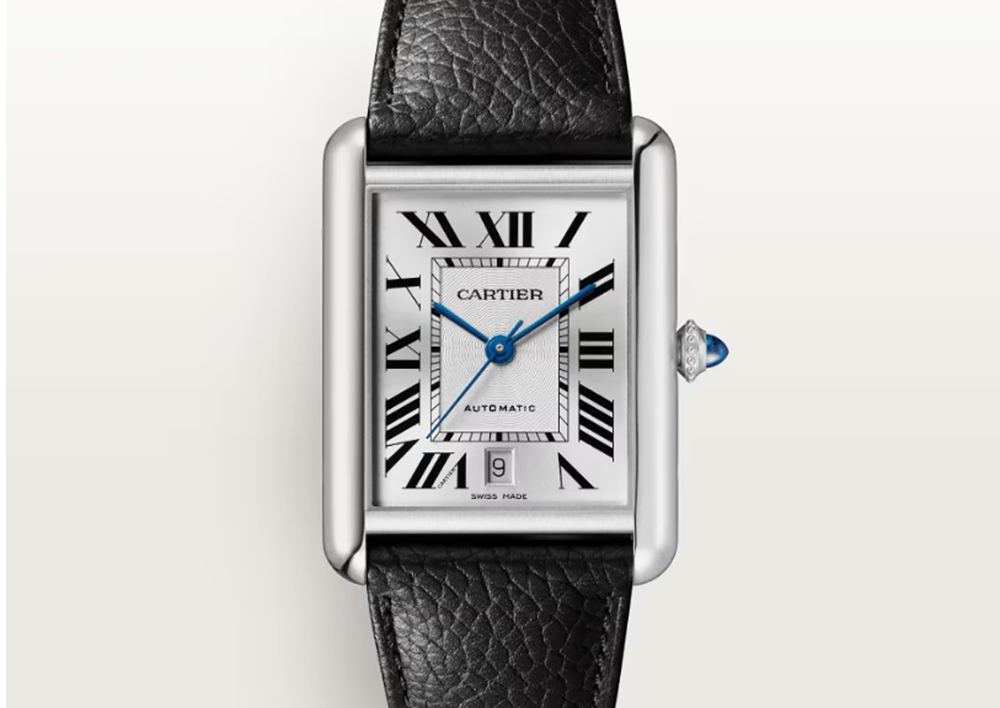
Now, think of Cartier’s Tank and a list of glowing adjectives probably springs to mind. Timeless, elegant, iconic, understated….. I could go on and on. But affordable? You’d be forgiven for not including that one, even though you can actually buy a mechanical time-and-date Tank Must for £4,900.
Among the many Tank variations on offer, from the Americain to the Cintree, the Must is the one that is closest to Louis Cartier’s 1917 original.
This extra-large model in stainless steel features everything that’s quintessential about Cartier watches, from the cabochon crown to the silvered flinqué dial with stylised Roman numerals and blued-steel hands. There’s also discreet calendar aperture at 6 o'clock.
Don’t be put off by this Tank being labelled the “extra-large” model. At 41 mm by 31mm in diameter and 8.4mm thick, this is a sleek and surprisingly versatile watch that doesn’t always have to be paired with your nicest suit.
Muhammad Ali actually wore his dinky Cartier Tank with a plain white T-shirt and no one seemed to complain—well, not openly or within earshot anyway…
Inside you’ll find Cartier’s automatic Calibre 1847 MC, which has a power reserve of 42 hours.
Jaeger-LeCoultre Reverso Monoface 35.7mm, reference Q2608442
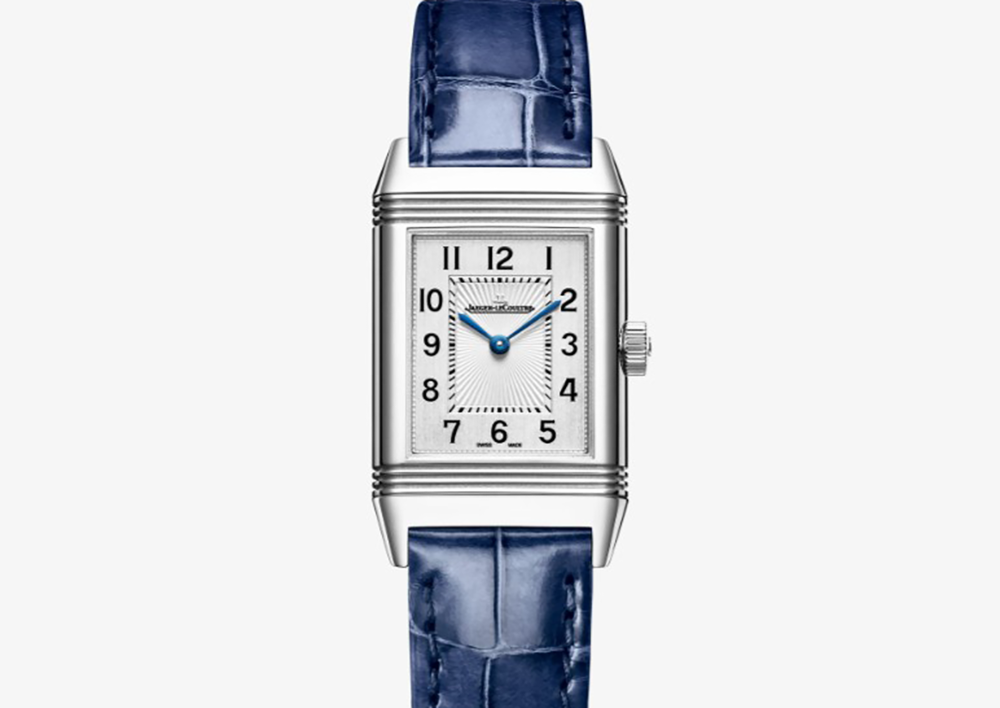
There’s no watch quite like Jaeger-LeCoultre’s Reverso with its ingenious case that swivels around to protect the dial side.
When a luxury watch from a brand like this is capable of pulling off such a novel feat of engineering, it’s bound to be reflected in the price. And that’s why an entry-level Reverso costs £7,200.
Still, for this you get the brand’s most celebrated model, an Art Deco icon that has often been a showcase for technical innovation and craftsmanship, with the caseback often used to display vivid enamel masterpieces, or another dial.
This is a time-only model in steel, and here, the reverse side is plain. But there are plenty of design flourishes to get excited about, like the guilloché dial framed by the case’s iconic gadroons—a series of raised decorative lines. And if you ever get bored of the plain case back and want to jazz it up, Jaeger-LeCoultre offers its own personalisation service. Paul Newman’s wife might have had it inscribed with: “Reverse carefully, me”.
Inside is the in-house manual-wind calibre 846 with a 50-hour power reserve.
Vacheron Constantin Fifty-Six 40mm, reference 4600E/000A-B442
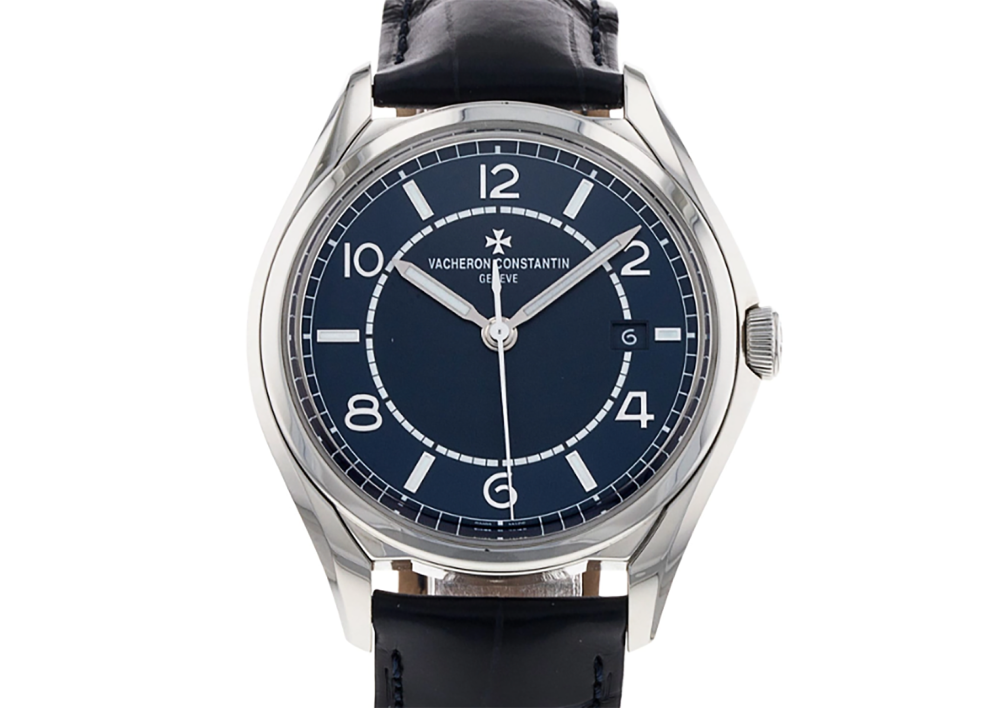
Of the hallowed Big Three of the watch industry, namely Patek Philippe, Audemars Piguet and Vacheron Constantin, it’s the latter that makes the most affordable mechanical watch.
This time-and-date Fifty-Six model costs £12,600 and comes in a 40mm stainless steel case. Its concentric sector dial is offered in either silver or petrol-blue, and features baton hands and alternating block indices and Arabic numerals, both 18k gold, with the date window at 3 o’clock.
The Fifty Six is a relatively new addition to the Vacheron Constantin catalogue. It was introduced in 2018, but takes inspiration from an earlier model from 1956—the reference 6073, notable for being one of the very first of the brand’s watches to feature an automatic movement.
Although it’s stainless steel, there’s no mistaking that this is a watch from a high-end brand. Besides the 18k white-gold hands and hour markers is the 22k yellow-gold winding rotor, on display through the caseback. It is powered by the automatic Calibre 1326 with a 48-hour power reserve.
Lange Saxonia 37mm, reference 201.027
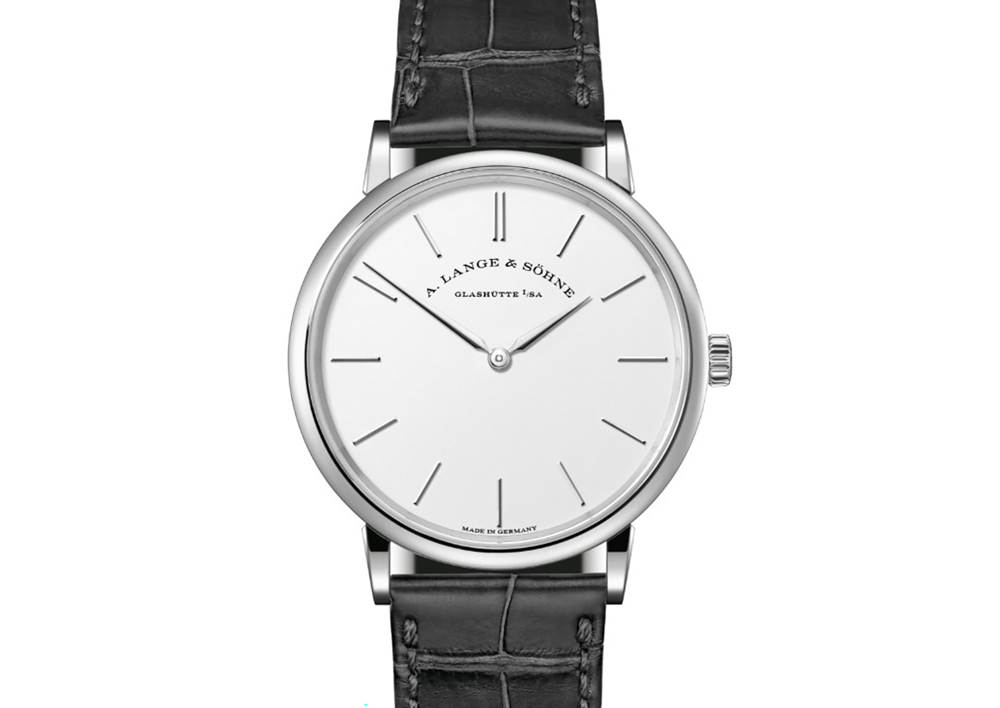
Next, we have the Saxonia, at £22,900 the most affordable watch in the incredible catalogue of A.Lange & Sohne.
Besides the sporty Odysseus and extremely rare one-offs for charity, Lange doesn’t really make stainless-steel watches, so even its entry-level model is fashioned from gold.
The white-gold Saxonia Reference 201.027 is about as minimalist as a watch can get and its case size of 37mm is in the dress-watch sweet spot. In true Lange tradition, its argenté-coloured dial is crafted from a disk of solid silver, with baton hour markers, lancet hands and no seconds hand at all. It’s also the manufacturer’s thinnest watch so far with a case thickness of 5.9mm.
Through the caseback you’ll find the manual-wind Calibre L093.1 with a quarter plate decorated in Glashutte striping, plus the uniquely hand-engraved balance cock. It has a power reserve of 72 hours.
It’s also offered in pink gold at the same price.
Patek Philippe Calatrava 39mm, reference 6119G-001
Finally, there’s Patek Philippe, a brand that’s never going to mass-produce a collection in stainless steel just so mere mortals can get a taste of its greatness.
Because as the saying goes “gold wouldn’t be gold if it was easy to get.” And to paraphrase the Patek Philippe CEO, “cope harder, povos.”
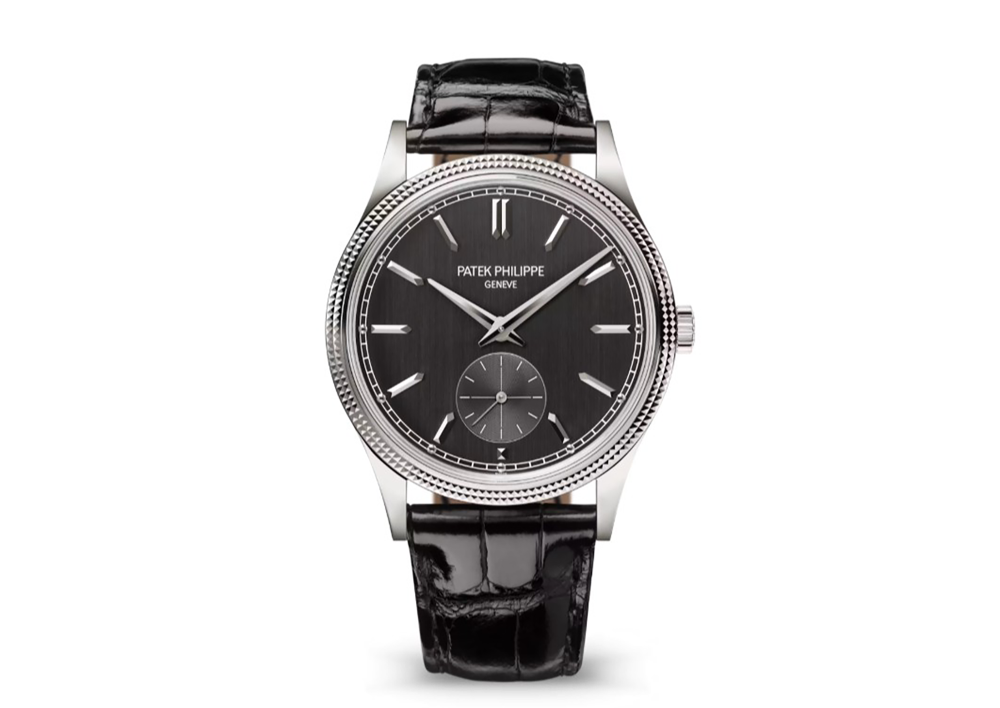
All of which is to say that Patek’s most affordable watch is it’s 39mm white-gold Calatrava reference 6119G, which costs £30,280.
This contemporary version of the brand’s flagship model comes with the famous hobnail—or clous de Paris—bezel and boasts a case thickness of just 8mm.
Its dial is charcoal-grey with a vertical satin finish and features a small-seconds display at 6 o’clock. The "obus"-style hour markers and faceted dauphine-style hands put the finishing touches to this classic, while on the reverse you’ll find an open caseback revealing the manual-wind Caliber 30-255 PS, exquisitely finished in a manner befitting the mighty Patek.


